
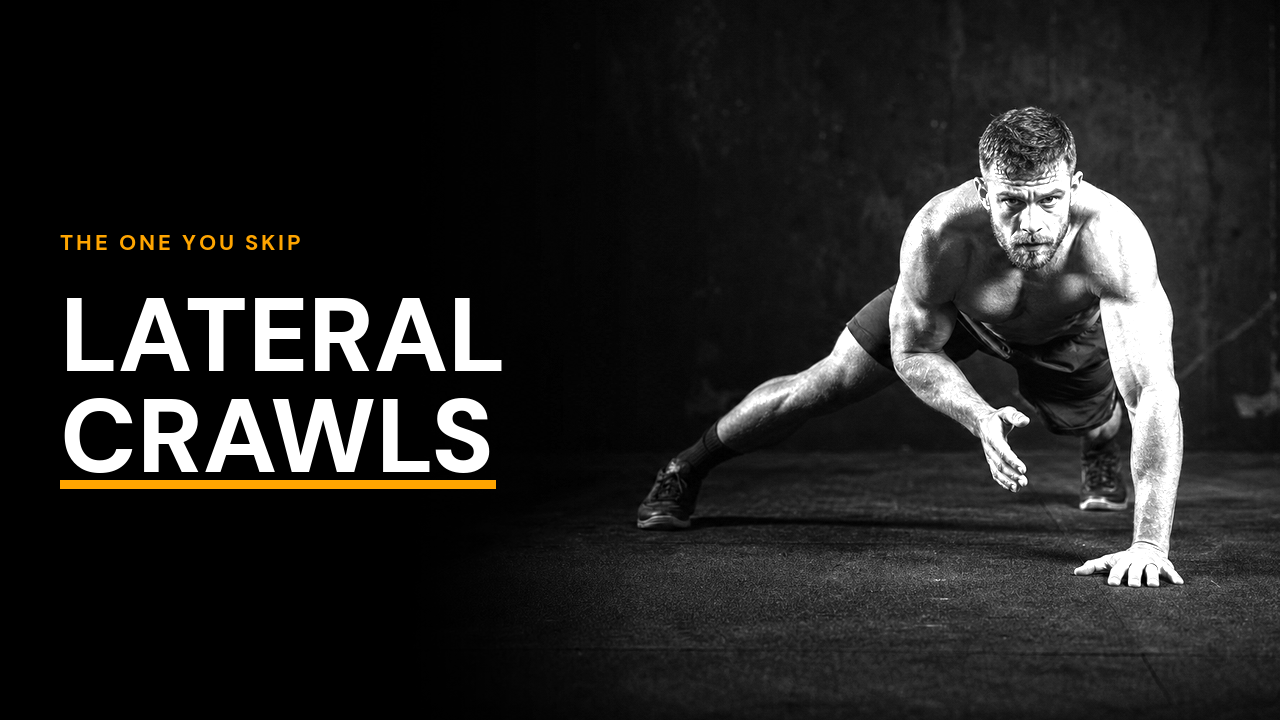
Lateral Crawls for MMA: How to Do Them and Why They Work
Jun 28, 2021The lateral crawl is the one everybody skips. Bear crawls go forward, forward feels productive, and sideways feels awkward — so it gets left out. Which is a problem, because fighting happens sideways far more than it happens forwards.
Here is how to do it, what it trains, and why your first attempt is going to be worse than you expect.
How to Do a Lateral Crawl
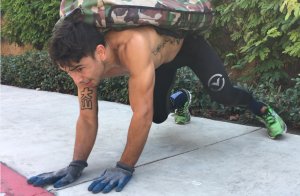
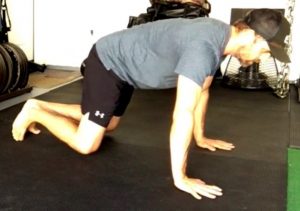
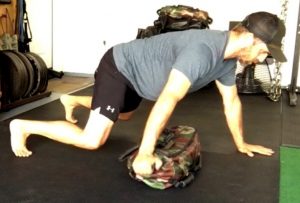
- Get into a bear crawl: hands under shoulders, knees an inch off the floor, hips at shoulder height or lower.
- Pick a direction. Move the lead hand and the lead foot out to that side together.
- Follow with the trail hand and trail foot. Do not cross the limbs over each other.
- Keep the shoulders and hips square to the floor the whole time. No twisting.
- Travel eight to ten steps, then come back the other way. That is one set.
What It Trains That Forward Crawling Does Not
- Hip abduction under load. Moving the leg away from the midline while carrying bodyweight. Forward crawling barely touches this.
- Frontal plane trunk control. Resisting side bend and rotation, rather than resisting extension.
- Single-side shoulder support. The load shifts fully onto one arm at the transition, every step.
- Coordination under a bad angle. Which is what a scramble is.
Why Fighters Need It Specifically
Almost nothing in a fight is a straight line. You circle, you cut angles, you shuffle out of the pocket, you scramble sideways off a failed shot. All of that loads the hip away from the midline while the trunk resists getting bent over.
| Fight situation | What the lateral crawl covers |
|---|---|
| Cutting an angle out of the pocket | Hip abduction with the trunk staying square |
| Scrambling off a failed takedown | Loaded lateral movement with weight on the hands |
| Framing off the cage | Single-arm shoulder support at a bad angle |
| Recovering guard sideways | Hip control under load with the trunk braced |
| Circling away from power | Repeated hip abduction without crossing the feet |
The wider context is in the MMA strength and conditioning guide, and the full variation library is in the crawling exercise library.
Programming It
| Level | Dose | Progress to |
|---|---|---|
| First two weeks | 3×6 steps each direction, in the warm-up | More steps, not more speed |
| Weeks 3–4 | 3×10 steps each direction | Add a two-second pause at the turnaround |
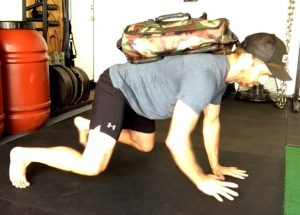
| Weeks 5–6 | 4×10 steps, 30–40s work | Light load, or a band at the hips |
| After | 2×/week maintenance in the warm-up | Leave it there and train something else |
Do not chase distance. Ten clean steps beats thirty sloppy ones, and sloppy lateral crawling mostly trains you to rotate, which is the opposite of the point.
Common Mistakes
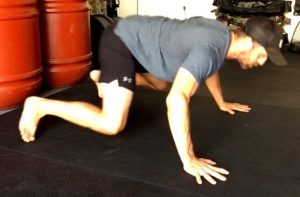
- Crossing the feet over. Turns it into a shuffle and removes the abduction demand entirely.
- Hips rising. The most common cheat. Keeps you moving, kills the trunk work.
- Rotating the shoulders. You will feel one shoulder drop. Slow down.
- Only going one direction. Everybody has a good side. Train the bad one twice as much.
- Adding load first. Load a clean crawl, never a broken one.
How to Tell If Yours Is Any Good
Film ten steps from the front on your phone. You are looking for four things:
- Hips stay at shoulder height or below the entire way. No rise at the transition.
- Shoulders stay level. If one drops as you step, you are rotating.
- Feet never cross. Lead foot out, trail foot follows, every step.
- The pace does not change. Step ten looks like step one.
If all four hold, add steps. If any one fails, cut the distance in half and fix it before adding anything. Almost nobody passes on the first try, and that is the point of filming it.
Where It Fits Next to the Rest of Your Crawling
| Do this first | Then this | Then this |
|---|---|---|
| Baby crawl, hips low, 30s | Forward bear crawl, 30–40s | Lateral crawl, 8–10 steps each way |
| Teaches the brace | Builds shoulder support endurance | Adds hip abduction and anti-rotation |
If you cannot hold a clean forward bear crawl for forty seconds, the lateral version will just teach you to rotate. Build the base first — the order is laid out in the crawling exercise library, and the physiology behind why it transfers is in what crawling actually builds for wrestlers and grapplers.
One Honest Caveat
The lateral crawl is a good drill with a narrow job. It builds hip control and trunk stiffness in a direction you rarely train. It does not build your gas tank, it does not build your grip, and it will not make a bad scramble into a good one on its own. Eight to ten steps, two or three times a week, then go train the thing you actually lack. If that is your engine, start here.
Common Questions
Why is the lateral crawl so much harder than a bear crawl?
Because hip abduction under load is a quality almost nobody trains, and because the trunk has to resist side bend and rotation at once instead of just resisting extension.
How many lateral crawls should I do?
Three or four sets of eight to ten steps each direction, two or three times a week. It is quality work, so the set ends when the form breaks.
Can I do lateral crawls every day?
You can, in a warm-up, at low volume. There is little reason to. Two or three times a week gets you the benefit.
Does it help my wrestling as well as my striking?
Yes. Scrambles are loaded lateral movement, which is exactly the demand. It applies wherever the hips have to move sideways under load.
Related Reading
- the crawling exercise library
- what crawling actually builds for wrestlers and grapplers
- where crawling fits in a fighter’s week
- crawling patterns for general strength work
Train stronger. Move better. Last longer.
Start with the free Fighter’s Conditioning Starter Kit — the exact warm-up, power, and gas-tank work we run with pro MMA fighters. Or go all in with The PHYSICAL Fighter, the complete strength and conditioning system for mixed martial artists.
Get the Free Conditioning Starter KitSee The PHYSICAL FighterTrain to outlast, outwork, and overwhelm.